LT5
The developing individual
Immediate demands consume much of the available capacity. Development centers on greater stability, useful skills, reliable relationships, and control over personal conditions.
UNDERSTANDING ASCENSION

6 · CULTURAL CONSEQUENCE
An individual expression becomes cultural when others pick it up. What people repeat, adapt, and pass on can shape how a whole community moves, speaks, or acts.
Read this pathDifferent structures. Different starting conditions. Different paths of development.
FSL describes consequential geometry. Development can expand a structure within its existing layer, change the layer from which it produces consequence, or reveal a function that was already present.
01 — UNDERSTANDING YOUR TIER
LT, MT, and HT describe different degrees of development and consequential expression within an existing structural layer.
5 · NORMIEIndividual development
MT5 · An established personal structure supports effective work and continued development within existing systems.
6 · INFLUENCERCultural consequence
MT6 · A sustained relationship shapes expression or collective behavior within a cultural field or community.
7 · ARCHITECTSystemic consequence
MT7 · Functioning systems reorganize substantial commercial, technological, institutional, or organizational relationships.
A highly developed individual can remain within five. A larger Influencer can remain within six. Vertical ascension requires a different consequential relationship.
An HT5 may possess more wealth than an MT6. An HT6 may have more public recognition than an MT7. An HT7 may control more resources than an FSL8. Those differences describe magnitude and conditions. Depth follows the relationship from which consequence is generated.
02 — THE DEVELOPMENTAL RANGE
These movements describe recognizable paths through four to seven. They are available relationships to examine, rather than a sequence every structure must complete.
Recurring localized destruction contracts possibility in the surrounding field. Violence, theft, persistent disruption, and damaged relationships can express this function. A criminal record, income, or neighborhood does not independently establish it.
Patterns develop through relationships. Unstable environments, destructive networks, inadequate infrastructure, and limited opportunities can contribute to their emergence. The individual affects the environment; the environment affects the individual.
Reorganize destructive behavior. Establish stability. Develop useful skills. Construct relationships and environments that sustain coherent possibility. The movement is from recurring localized Drag toward maintenance and development.
Five occupies the center of the conceptual FSL distribution. Its function is to sustain and develop existence within established structures: work, skills, resources, knowledge, relationships, and personal circumstances.
Immediate demands consume much of the available capacity. Development centers on greater stability, useful skills, reliable relationships, and control over personal conditions.
A more sustainable personal structure supports effective work and continued development. Skills, knowledge, resources, and relationships create room for additional possibilities.
Exceptional personal capability operates within existing systems. Expertise, independence, and resources can produce extraordinary personal outcomes while the underlying layer remains five.
Wealth does not independently establish Architecture. Expertise does not independently establish fundamental discovery. Examine how the developed capacity is conducted and what it actually produces.
Individual capacity becomes cultural consequence when its expression shapes collective behavior, identity, aspirations, or shared direction. Communication, art, sport, education, and entertainment can provide channels for this relationship.
Some develop toward it from five. Others encounter an early combination of ability, opportunity, training, and distribution. Industries and communities can discover, cultivate, and conduct these capacities.
Expression begins to shape an audience, community, or shared behavior beyond the individual's immediate activity.
A sustained relationship influences expression or collective behavior within a cultural field, industry, community, or demographic.
Expression shapes behavior, aspirations, or cultural direction across substantial populations.
Becoming more recognizable or reaching a larger audience can expand magnitude within six. Architecture begins when the structure reorganizes the systems through which consequence is generated.
The Architect reorganizes relationships that generate consequence: businesses, products, teams, technologies, institutions, and infrastructure. The transition from six occurs when collective influence becomes organized into functioning systems.
Architecture can also develop without a cultural audience. Engineering networks, universities, research laboratories, financial institutions, and entrepreneurial environments can supply knowledge, relationships, capital, and direction.
Organized teams, products, businesses, or systems begin generating consequence beyond the individual's activity.
Systems sustainably reorganize substantial commercial, technological, institutional, or organizational relationships.
Extensive networks reorganize industries, technological ecosystems, institutions, or infrastructure across large fields.
Institutional power and structural depth are different properties. Direction remains a separate examination: what possibilities do the organized systems develop, constrain, or destroy?
Acquire useful skills, knowledge, resources, experience, and direction.
Conduct those capacities beyond yourself. Individual capacity becomes collective consequence.
Build systems through which that consequence continues. Collective consequence becomes infrastructure.
03 — DIFFERENT MECHANISMS OF EMERGENCE
Beyond Architecture, the consequential relationship changes. More resources, attention, or authority alone cannot generate the next depth.
8 · REVEALER · FUNDAMENTAL DISCOVERY
Discover relationships that were previously unrecognized, opening possibilities existing systems could not account for.
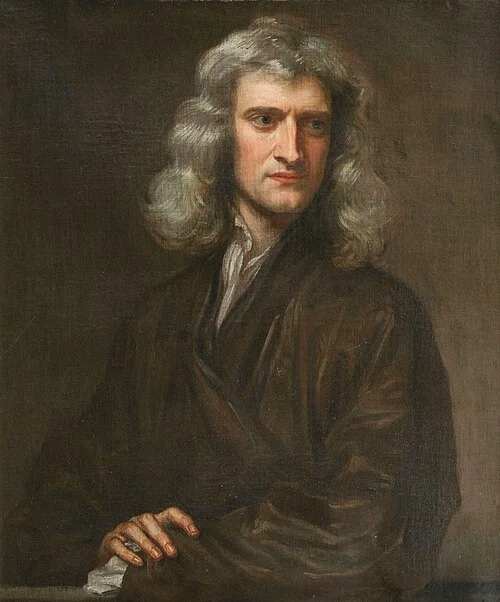
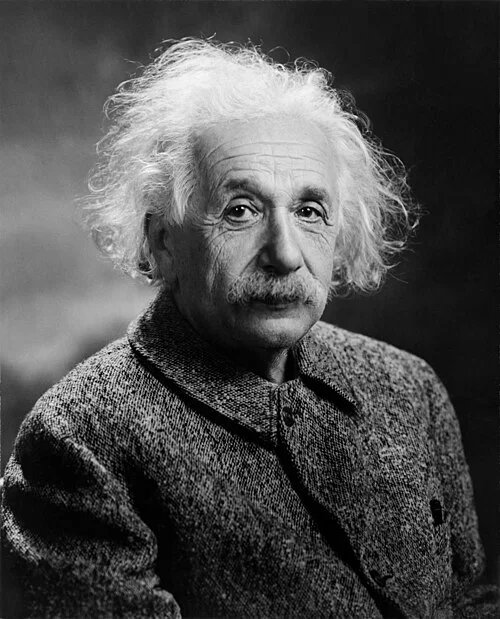
Constrained time, tools, resources, and relationships can consume or obstruct the expression of latent capacity. The capacity remains; discovery is not guaranteed.
A conceptual relationship, not a prediction or a score.
Some structures return persistently to fundamental examination. They recognize patterns, sustain inquiry, and develop direction through their existing dispositions. This can make discovery unusually self-sustaining.
Capacity still requires a relationship with reality. Survival demands, financial constraints, isolation, incompatible environments, or missing resources can obstruct its expression. Fundamental capacity can remain latent throughout a life.
The gift may be present before its consequence. Access and recognition become actualized Fundamental consequence through what is discovered, made intelligible, and opened to further development.
The Architect constructs the conditions. Institutions, tools, resources, and relationships give examination room to develop.
The Revealer discovers new possibilities. Those discoveries can enable systems that were previously impossible.
9 · TRANSCENDENT · EXISTENTIAL EMERGENCE
An exceptional direction actualizes at existential depth, reorganizing how humanity understands and conducts existence.
Humanity has often used the language of the Chosen to recognize unusual existential direction. Examine the structure beneath that language: persistent orientation, the capacity to sustain a function, and the relationships through which it becomes consequential.
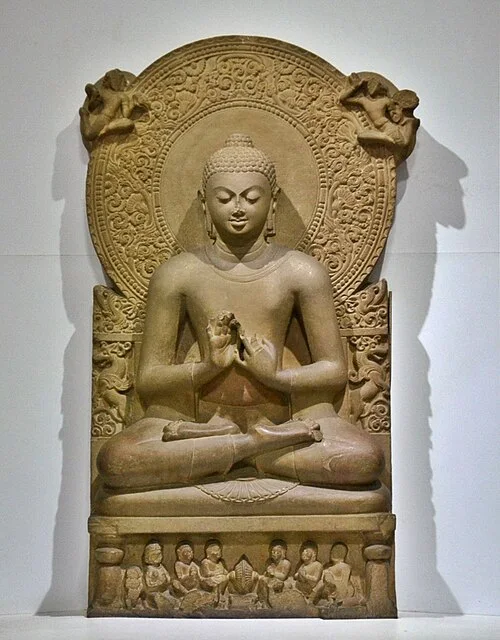
The structure can generate and maintain direction without continuous external instruction. Its environment can amplify, obstruct, or terminate its expression, while the direction itself may not originate in that environment.
Self-sustainment describes how direction continues. Existential depth describes what that direction actually reorganizes. Persistence, conviction, or a private sense of mission alone does not establish nine.
Examine the existential framework, the structures conducting it, and its actual consequences across an affected field and time horizon. No established procedure manufactures this form of emergence.
10 · CONSTANT · ONTOLOGICAL RECOGNITION
Reorganizes the starting relationship between the observer and reality.


The Constant is a different consequential function from a larger or more developed Transcendent. It operates upon the starting relationship from which the field is perceived and conducted.
The underlying function can operate before a structure consciously recognizes it. Recognition can change its concentration, accessibility, and expression. Conscious understanding and the actual performance of the function remain distinct.
Accumulated status, knowledge, influence, or power does not independently produce this movement. What changes is the generative relationship itself, allowing the individual, culture, institutions, fundamental understanding, and existential orientation to be re-examined.
The deepest movement is not necessarily addition. It is revelation.
04 — STARTING CONDITIONS
FSL is not a chronological progression system. A structure can enter a consequential relationship without passing through every preceding tier.
A useful individual capacity becomes collective expression, then functioning infrastructure.
Ability and an enabling cultural environment can produce early collective consequence, then greater development within six.
Technical, institutional, or entrepreneurial relationships can enable Architecture without a prior public audience.
Fundamental capacity meets the conditions through which it can produce a consequential discovery.
A self-sustaining orientation becomes a consequential reorganization of how existence is understood and conducted.
Recognition makes an underlying ontological function accessible to examination and consequential expression.
Conditions enable, constrain, and redirect development. Skills need channels. Discovery needs room. Systems need people and resources. Changing a relationship or environment can release capacity that additional effort within the same arrangement cannot.
Examine both directions: what the structure brings into the field, and what the field permits it to become.
RECOGNIZE THE MOVEMENT AVAILABLE TO YOU
A highly developed individual can sustain extraordinary personal consequence. An Influencer can transform culture. An Architect can enable discovery. A Revealer can open possibilities for entirely new systems. These functions develop through one another.
Begin with the function you are performing, the relationships conducting it, and what it actually produces. Identify the constraint. Examine what can be rearranged. Follow the consequences.
LT, MT, and HT are qualitative descriptions within the proposed FSL model, not calibrated scores. Actual classifications depend on structural function, direction, and consequence; they do not measure human worth.